December’s inflation report showed annual price growth holding steady at 2.7%, reinforcing expectations that the Fed is likely to keep interest rates unchanged. But one category stood out: grocery prices rose 0.7% in December, the largest one-month increase since October 2022, underscoring how food costs remain a major pain point for households even as broader inflation cools.
This analysis, written by Trace One’s Federico Fontanella, PMP, looks beyond the monthly spike to identify which grocery store items have seen the steepest price increases over time.
Using federal pricing data, the study ranks grocery store items by cumulative price growth since the start of the pandemic, alongside 1-, 2-, and 3-year changes, highlighting which everyday staples have seen the most persistent inflation and helping explain why grocery bills remain elevated despite improving headline numbers.
Key Findings
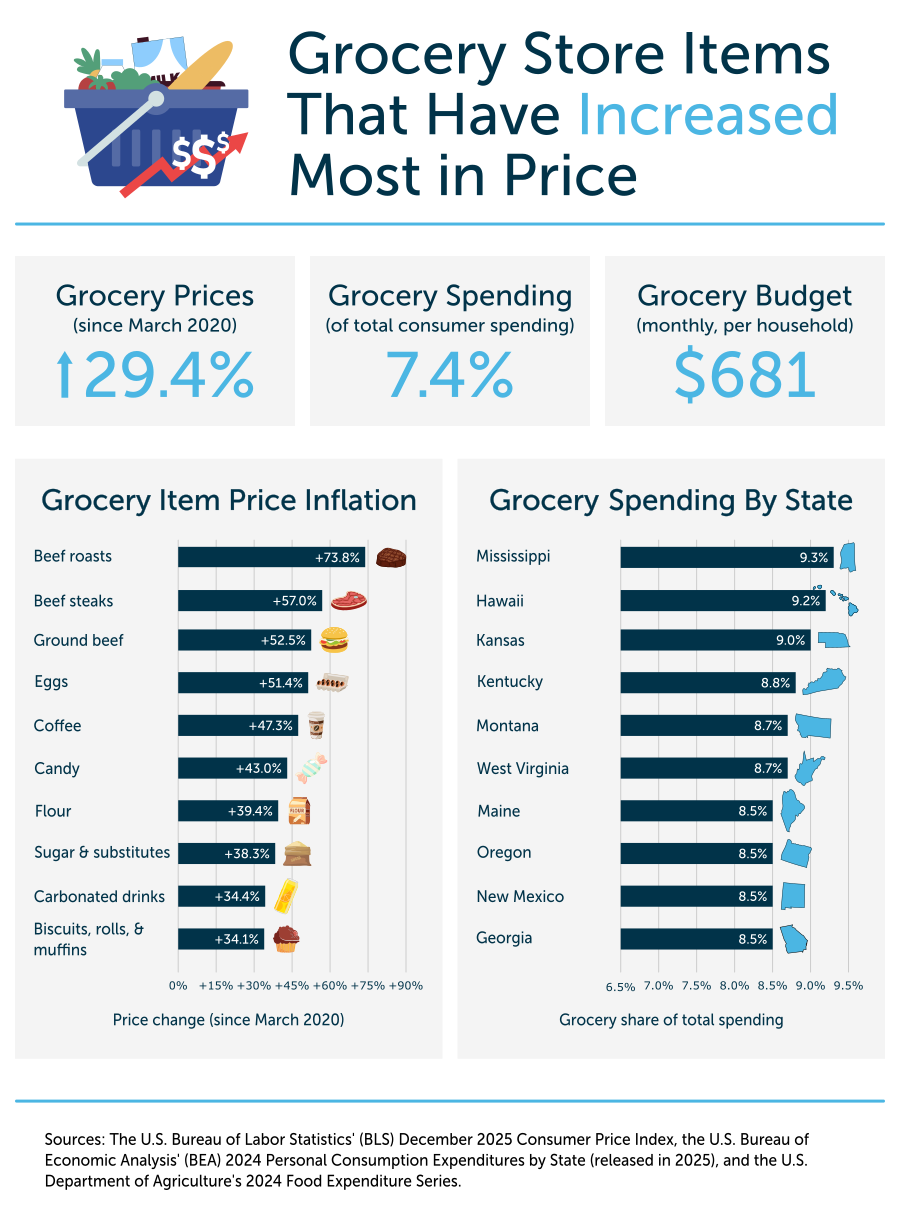
- Grocery inflation has outpaced broader inflation since the pandemic began. From March 2020 to December 2025, the Consumer Price Index (CPI) for food at home rose 29.4%, compared to 25.6% for all other items excluding food.
- Beef products have seen the sharpest price increases since the pandemic began. Beef roasts (+73.8%), beef steaks (+57.0%), and ground beef (+52.5%) rank as the top three items with the largest price gains since the pandemic.
- Eggs experienced extreme price volatility. While egg prices rose 51.4% since March 2020, they declined by 13.2% from December 2024 to December 2025, reflecting recent corrections after earlier spikes.
- Mississippi and Hawaii households spend the largest share of their budgets on groceries. Mississippi households allocate 9.3% of total consumer spending to groceries—the highest in the U.S.—followed closely by Hawaii at 9.2%.
- Average household grocery spending is nearing $700 per month nationally. Households now spend an average of $681 per month on groceries, representing 43.5% of total food spending.
Read the full analysis here!