
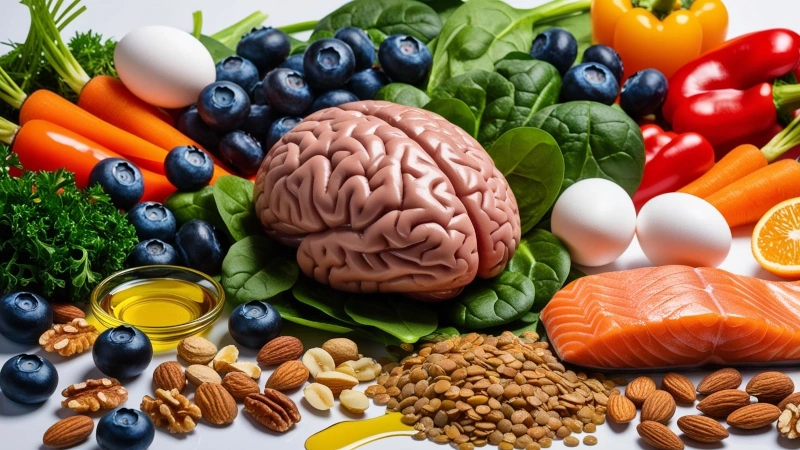
Effects of Diet on Teen Mental Health Need Closer Study
Editor’s Key Takeaways
- Healthy diets are correlated with better teen mental health
- Whole foods beat supplements for mental health
- Teen years are prime for positive diet changes
- One size doesn’t fit all: effects vary by gender & income
- Findings are based on 19 studies: 6 RCTs and 13 cohort studies analyzed
A new study says that diets could be changed to better support adolescent mental health.
The recently released Scientific Foundation for the Dietary Guidelines for Americans Appendices states that: “Adolescents should be encouraged to consume a variety of nutrient-dense foods—especially dairy products with added vitamin D and other calcium-rich foods such as dark leafy greens, along with iron-rich foods for girls such as unprocessed red meat, organ meats, and bivalves.” Noting that, “…when access to nutrient-rich foods is limited… fortified foods or supplementation under qualified healthcare guidance may be warranted.”
A new paper reviews 19 studies focused on nutrition and cognition during adolescence and finds that healthier dietary patterns were often associated with fewer depressive symptoms, while poorer diet quality was linked to increased psychological distress. The authors found that public health and clinical strategies should prioritize whole-diet approaches over isolated supplements for adolescent mental health promotion.
The findings appear in the peer-reviewed journal Nutrients and the research was supported by the Cognitive Health Committee of the Institute for the Advancement of Food & Nutrition Sciences (IAFNS).
The scientists say the teen years are a critical opportunity for prevention and early intervention to improve mental health in part because changes to diets can be broadly made. However, they also say the evidence for which diets and foods are optimal remains mixed, which led to this “systematic synthesis” paper by the authors from Swansea University in Wales, a research-led institution founded in 1920.
In the paper, they sought to improve the “real-world relevance of findings beyond clinic-defined groups, thereby enhancing applicability for both clinical practice and public-health policy.”
The scientists reviewed 6 Randomized Controlled Trials (RCTs) and 13 Prospective Cohort Studies that fit their criteria. They found that “there is emerging but inconsistent evidence that vitamin D supplementation may reduce depressive symptoms in adolescents.”
Overall, the researchers found that whole-diet patterns and quality were associated with better mental health outcomes, whereas single-nutrient supplements were less reliable.
The review showed that links between diet and mental health were also sensitive to income levels and differed by sex, indicating complex demographics at play. The authors conclude that public health professionals and clinicians should prioritize whole-diet approaches over isolated supplements to enhance adolescent mental health.
In their Roadmap for Future Research, the authors provide a forward-looking table for optimal future studies on teens and diet. They advocate for more exposure studies and the use of biomarkers in addition to open science, standardization and attention to outcomes beyond depression.
The science to date “remains dominated by depression outcomes, leaving anxiety, stress, externalizing behaviors, self-esteem, and aggression comparatively underexplored,” they conclude.
According to Prof. Hayley Young, corresponding author of the study, “The findings suggest that public health and clinical strategies should prioritize whole-diet approaches over isolated supplementation for adolescent mental health promotion.”
The paper is available here.
About the Institute for the Advancement of Food & Nutrition Sciences
The Institute for the Advancement of Food and Nutrition Sciences (IAFNS) is committed to leading positive change across the food and beverage ecosystem. This paper was supported by IAFN Cognitive Health Committee. IAFNS is a 501(c)(3) science-focused nonprofit uniquely positioned to mobilize government, industry and academia to drive, fund and lead actionable research. iafns.org
Founded in 1920, Swansea University is a research-led institution with two campuses along Swansea Bay in south Wales, UK. Its scenic beachfront location and welcoming atmosphere attract more than 28,000 students from around the world. The University offers approximately 450 undergraduate and 350 postgraduate programmes across three academic faculties. In 2024, Swansea achieved its highest-ever ranking in the QS World University Rankings 2025, reaching 298th globally and entering the top 300 for the first time. It was also named Welsh University of the Year 2025 by The Times and Sunday Times, and ranked 29th in the Guardian University Guide 2025. The 2021 Research Excellence Framework rated 86% of Swansea’s research and 91% of its research environment as world-leading or internationally excellent, with 86% of its research impact recognised as outstanding. Swansea University is a registered charity. No. 1138342.