From drones to data: MSU’s Basso Lab driving next era of regenerative agriculture
Regenerative agriculture research from Dr. Bruno Basso is helping farmers and partners improve productivity and sustainability through data-driven insights.
Written by: Jack Falinski, MSU AgBioResearch
*This story is part of a series highlighting the impact of MSU AgBioResearch’s work with Michigan agriculture and natural resources told through our stakeholders’ perspectives. Through partnerships with the State of Michigan and industries, MSU AgBioResearch is finding solutions to some of the timeliest problems facing our state. To view the entire series, visit agbioresearch.msu.edu.
When Jeff Sandborn first started working with Dr. Bruno Basso over 10 years ago, he didn’t know his collaboration with the John A. Hannah Distinguished Professor at Michigan State University would lead to him and his Portland, Michigan farm being featured in a story published by the New York Times.
But that’s what happened in 2025.
On display in the Sept. 22 article were all the concepts and tools Sandborn Farms has incorporated within its operations since 2014 based on the suggestions of Dr. Basso, whose position at MSU spans across the departments of Plant, Soil and Microbial Sciences and Earth and Environmental Sciences, as well as the W.K. Kellogg Biological Station.
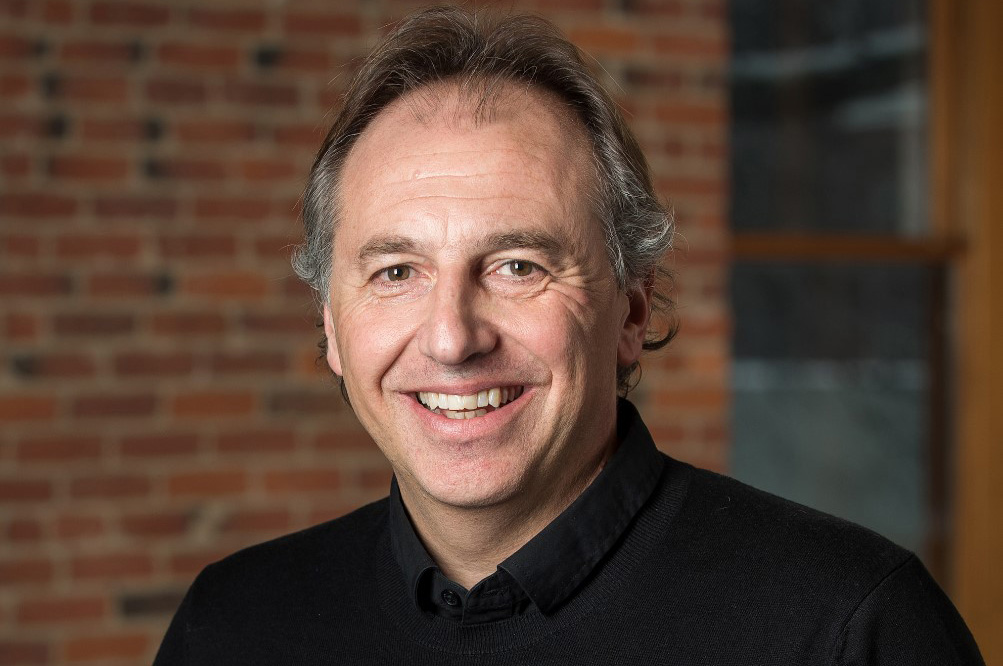
Dr. Bruno Basso, MSU John A. Hannah Distinguished Professor.
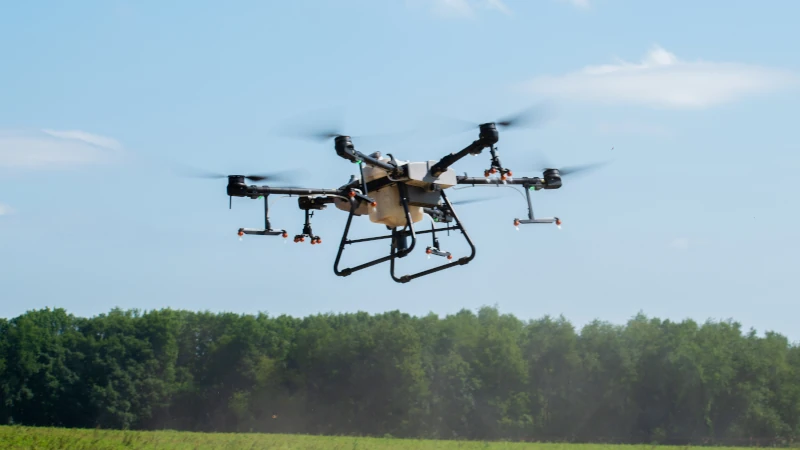
Most visible in the photos and videos were drones, technology that has allowed Sandborn to more precisely apply nutrients to his corn crop. What they have also allowed Sandborn to understand — by way of data gathered through remote sensing capabilities — is where on his property to apply the nutrients. Areas of land identified as having greater production potential based on soil health metrics have been given heightened attention from Sandborn, while he’s designated other parts of his land deemed to be less productive as spots that can support pollinators, wildlife and the environment.
In doing so, Sandborn has increased his yields, reduced unnecessary application and input costs, and helped restore his land — all of which, he learned, is gaining attention and appreciation, even beyond those he’s worked with.
“Something that I’ve never had happen — I had somebody send me a note for doing what Dr. Basso is promoting in the article,” Sandborn said. “It was a nice lady from Augusta, Georgia, and she said, ‘I’m thankful you’re employing precision conservation, as mentioned in the New York Times. A win-win.’
“I can say I’ve never gotten a note from a non-farmer or farmer thanking me for doing something like this, so it’s impactful. What Dr. Basso is doing … there’s different schools of thought on anything involving agriculture and the environment, but if you can come at it like Dr. Basso has, it’s more impactful and comfortable. We’ll have more benefit with approaches like his.”
The research coming from the Basso Lab promotes the prosperity and well-being of people, food systems and the environment, which has made it a key part of the MSU Center for Regenerative Agriculture.
The center, which is supported by MSU AgBioResearch, is a hub made up of MSU scientists conducting research on regenerative ag techniques and educating farmers and landowners about how to incorporate them into operations and the benefits that can come from doing so. The team’s goal is to advance ways in which these agricultural components — from people, plants and animals — can work together to strengthen and improve soil health, biodiversity and supply chains.
Regenerative agriculture isn’t a new concept, but new technologies and novel methods are advancing the ways in which it can be done. Examples of techniques that traditionally have been implemented include cover cropping, no-till farming, multi-year crop rotations and the inclusion of pasture recovery periods for animal grazing.
But, in the case of Dr. Basso’s work, machine, computer and geospatial technologies have helped him create innovative models to support regenerative agriculture, not only in Michigan, but throughout the U.S. and across the world.
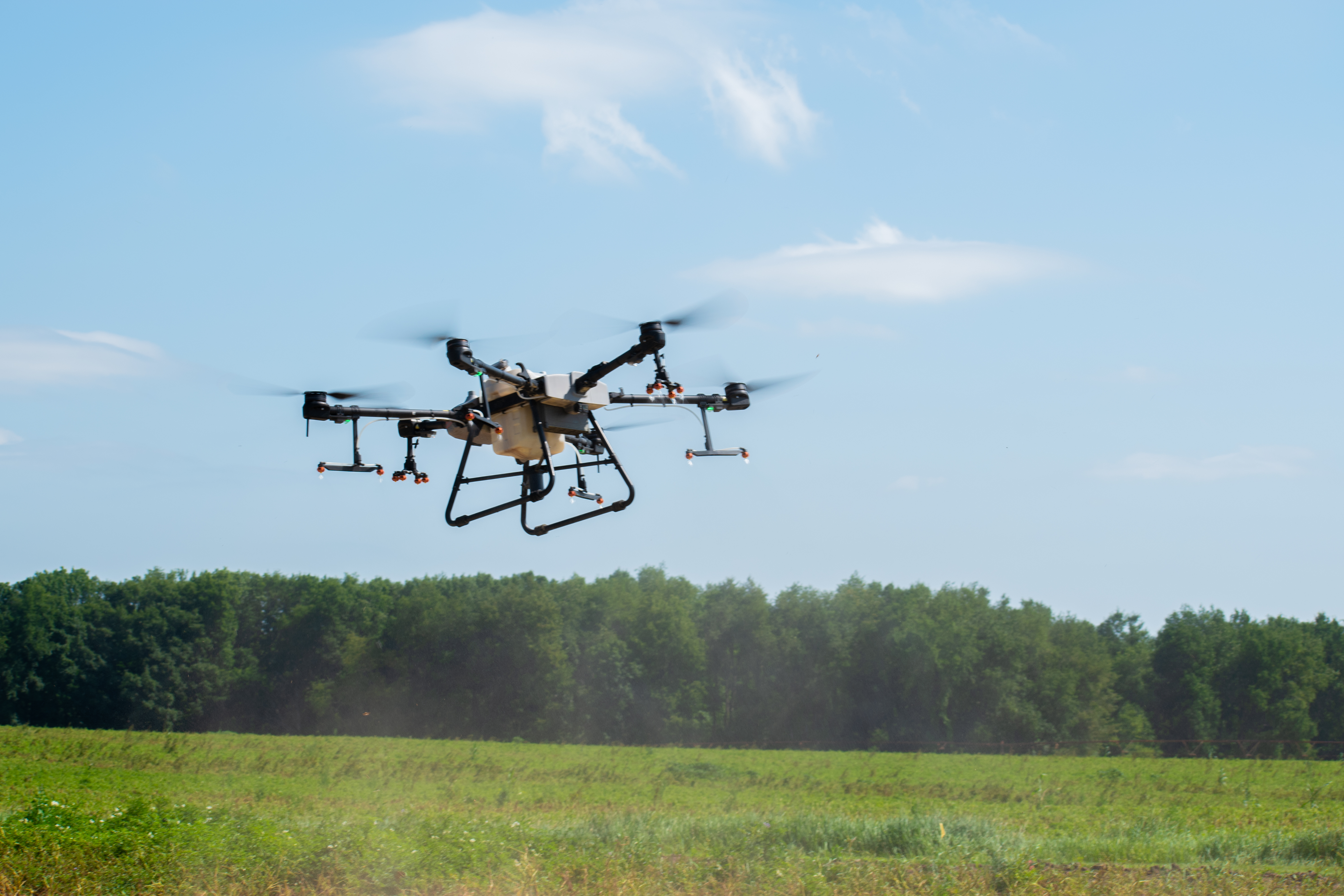
Dr. Basso uses machine, computer and geospatial technologies — such as drones — to create innovative models that support regenerative agriculture.
“The vision of MSU as a land-grant university and our goal for the center to be one of the most critical hubs on regenerative agriculture — we can’t think about just helping farmers close to MSU,” Dr. Basso said. “We have to design this type of research in a scalable way that helps not only the farmers close to East Lansing, but also the ones as far away as the Thumb [of Michigan] and beyond, because we work regionally, nationally and globally.”
His Systems Approach to Land Use Sustainability (SALUS) program projects crop, nutrient, soil and water conditions under different management strategies spanning multiple years, and his yield-stability-zone metric system gives farmers a greater sense of what soil health is like across their land and what agricultural inputs are needed when and where. Additionally, a multi-model ensemble framework he co-developed accurately compares data (such as soil organic carbon sequestration and nitrous oxide emissions) from when regenerative agriculture practices are used compared to when other ag practices are used.
Most recently, Dr. Basso and his lab members, along with Dr. Jason Rowntree, the C.S. Mott Professor of Sustainable Agriculture at MSU and an advisor at the MSU Center for Regenerative Agriculture, and colleagues from Belgium, published findings at the end of December 2025 that showed the benefits of diversifying crops and integrating livestock systems at scale across the U.S. Midwest using a first-of-its-kind model.
These models and programs are being utilized to deliver knowledge and actionable strategies to people in the state and across the country working to foster regenerative agriculture within the systems that humans, plants and animals rely on. Dr. Kristofer Covey, Asher Wright and Margaret Henry are three of those individuals.
Along with Dr. Basso, Dr. Covey, an associate professor at Skidmore College in New York, co-founded The Soil Inventory Project (TSIP), a nonprofit organization building soil data infrastructure to inform science-based decisions across the U.S. The collaborative was formed in 2019 at Caney Fork Farms, a regenerative farm in Tennessee where Wright is the farm director. Henry is the vice president of sustainable and regenerative agriculture at PepsiCo, where she currently leads ag sustainability efforts for the company’s Global Sustainability Office.
Hear from them below about the ways in which they’ve partnered with Dr. Basso and have incorporated work from the MSU Center for Regenerative Agriculture into their missions.
How does MSU research currently support your goals?
- Covey: There’s a part of the partnership between my lab at Skidmore College, the Basso Lab at MSU and TSIP that’s field data, then there’s a part that’s Dr. Basso’s modeling work, and then there’s TSIP itself which is taking these two parts and putting them together into a platform that’s meant for service. Just recently, the Basso Lab launched the multi-model ensemble for agriculture out of the Midwest, predicting a whole set of outcomes for a huge section of the country — millions and millions of acres of agricultural land — where we can put a lot of outcomes on the farm balance sheet that were previously hidden. What TSIP is doing is making those results available so that folks can act on them. In many ways, the work coming out of the Basso Lab is an engine that’s driving the impact of TSIP.
- Henry: MSU and Dr. Basso have been fantastic partners for us. Several years ago, PepsiCo brought Dr. Basso into our advisory group to look at our agriculture strategy and direction. We deeply value expertise across a range of experts and advisors and brought in Dr. Basso to provide some of the academic, deep expertise on the climate side. And we had a variety of other stakeholders as well, but we’ve relied on research from MSU and the academic brilliance Dr. Basso brings to translate deep subject matters into nuggets stakeholder audiences can understand and to connect the practical work we help farmers do on the ground every day with the direction of the academic community. His ability to do that is critical and valuable.
What outcomes or benefits do you expect from MSU research?
- Henry: Basso has helped us think about how to make sure our programs are at the cutting edge of relevance and bring the best of science to bear daily agricultural realities. And as that science evolves, he’s helped us understand how to build a regenerative ag program and nature program that’s building off the latest and greatest. He’s helped us build an approach at scale that’s flexible and can evolve. He’s helped ensure our program can take in science and react to it in credible ways that are practical for farmers to implement.
- Wright: The multi-model ensemble and the work that came out of the Basso Lab I think has a lot of potential to inform better management practices in both cropping and livestock grazing systems, where we need to connect management decisions on the ground to the outcomes we’re looking for. I also think Dr. Basso’s yield stability zones are informing precision agriculture and shifting the mindset that some areas of land aren’t even worth putting any fertility into. Synthetic fertilizers are a major contributor to greenhouse gas emissions, around 2% globally. Finding ways to reduce these and not waste them — not to mention the water and environmental concerns that are related to them — is another thing I think stability mapping and remote sensing are able to do.
Can you share an example of when MSU research has positively affected the work being done in regenerative agriculture?
- Covey: Whether it’s a farm or a whole corporation or an investment office trying to make a business decision, in exchange, they’re uploading valuable agricultural data to TSIP. Part of being a nonprofit is that we’re not competing with anyone else. What we say is that we offer value for data. So, instead of asking you to put data into this national repository because it’s the right thing to do, we’re offering participants real value that helps them make better decisions on the ground and helps market actors better understand the systems we’re trying to manage. The research coming out of the Basso Lab is one of the reasons people are coming into the platform. Large data holders who are managing tens of thousands or hundreds of thousands of acres of land, or companies inventorying that much land and holding data, are sharing data with TSIP explicitly because they’re receiving model outputs from the Basso Lab.
- Henry: I expect our programs to continue to explore profitability across the field and understand what areas of that field are unprofitable today where you’re probably getting the worst economic and environmental outcomes. What’s PepsiCo’s role in helping a farmer make the best economic decision that also optimizes their environmental impact on the field? That’s research Dr. Basso did that piqued our interest to say, “He’s done a pilot. He’s understood what’s possible academically. How do we take that and scale it? How do we use that knowledge and that expertise across the thousands of farmers and millions of acres we work with on regenerative practices?” It’s the perfect marriage of the right answer and the right scale that hopefully come together to produce the right impact for farmers and food systems in the world.
How can MSU research help to position regenerative agriculture to thrive moving forward?
- Covey: At TSIP we’re starting to layer on top of the scaffold we’ve built from models such as Dr. Basso’s multi-model ensemble the ability to pull a bunch more outputs out, so that’s one area — just enriching what we already have. I think going forward, there are so many more modeling products coming out of the Basso Lab that could be providing actionable insights for growers we can build within the next generation of insights delivered through this platform. I’m thinking about a heavier focus on topics such as yield and yield stability, biodiversity and precision agriculture applications being built into the platform.What is notable about the work coming out of the Basso Lab is that it’s driven by creating a positive impact and producing change at scale in the world.The way that we’ve come together to make TSIP and apply that science at scale for impact is truly unique.
- Wright: I think the potential for regenerative agriculture in the future is great. I think the necessity for it is important and, in some ways, dire. I think where people struggle from a scientific perspective — which, as we know, science also informs policy — is answering what the long-term impacts are and what the return on investment is. Private-public partnerships, such as what we’re able to do with MSU, are pathways to making better informed decisions and understanding return on investment, and it’s important to remember the return is more than just cash. What are the animal welfare benefits? What are the human health benefits? What are the environmental benefits? Those types of complex questions need time and can be difficult to fully wrap our minds around in a short-term study. We need to be doing this work now so that future generations in 20 years have a rich data set to answer questions about which management practices they should adopt.
What would you say to legislators and other decision-makers to advocate on behalf of continued funding for the work being done at the MSU Center for Regenerative Agriculture? Why is this work important to fund?
- Covey: We can’t make smart decisions in a vacuum, so the data and tools used from TSIP and the Basso Lab for decision-making are what turn agriculture from a contributor to a problem — think about pollution, biodiversity loss, the clearing of forests and the degradation of soil, which then ultimately leads to a less resilient agricultural system — to a big part of a solution. It can bolster biodiversity. We can make it an economic driver of prosperity and part of the climate solution. That’s all on the table. And the cost to build the infrastructure to do this is stunningly low relative to the potential impact. When we think about the input needed to energize this transition, we’re in the millions of dollars to fix a multi-billion dollar set of problems, so it’s a relatively small investment that needs to be made for us to see a giant, outsized change in the world occur.
- Henry: We need research from land-grant institutions — critically. They provide such an important, impartial, scientifically sound base of research upon which governmental policy can be made upon and corporate strategies can be built. With this research, we can collaborate across all the different actors who care about an ecosystem and a community and the health of that ecosystem and community. We can collectively make the right decisions that are science-based and independently researched. MSU and land-grant universities play an utterly critical role in understanding what’s the future of all rural communities and ecosystems across the U.S.
The post From drones to data: MSU’s Basso Lab driving next era of regenerative agriculture, written by Jack Falinski, first appeared in Michigan State University’s CANR Newsroom.
About Michican State AgBioResearch
Michigan State University AgBioResearch scientists discover dynamic solutions for food systems and the environment. More than 300 MSU faculty conduct leading-edge research on a variety of topics, from health and climate to agriculture and natural resources. Originally formed in 1888 as the Michigan Agricultural Experiment Station, MSU AgBioResearch oversees numerous on-campus research facilities, as well as 15 outlying centers throughout Michigan. To learn more, visit agbioresearch.msu.edu.