On the edge of a breakthrough: UF/IFAS breeding disease-resistant lettuce for U.S. farms, kitchens
Written by: Lourdes Mederos, UF/IFAS
University of Florida scientists are closer to a breakthrough that could safeguard the nation’s lettuce supply. Backed by a $500,000 federal grant, the team is working to develop disease-resistant lettuce varieties built to withstand shifting weather and growing challenges.
German Sandoya, associate professor of horticultural sciences at UF’s Institute of Food and Agricultural Sciences (UF/IFAS) is leading the effort with funding from the U.S. Department of Agriculture National Institute of Food and Agriculture (USDA-NIFA).
The research targets bacterial leaf spot, a persistent disease that can significantly reduce yield and quality. Scientists are also responding to rising temperatures that threaten lettuce, a crop adapted to cooler conditions.

German Sandoya (left) examining seed samples in a lab at the UF/IFAS Everglades Research and Education Center. Credit: Tyler Jones, UF/IFAS
“This type of research takes time,” said Sandoya, based at the UF/IFAS Everglades Research and Education Center in Belle Glade. “From the earliest breeding stages to releasing a cultivar, you are looking at seven to eight years. But we are now at the point where we have multiple promising lines and are narrowing them down.”
Florida is the nation’s third largest lettuce-growing state, with most of this crop produced during the winter. Farmers begin planting in early fall and continue through early spring. Harvest season starts in late fall and can run through April or even May.
But as a food staple in homes, vegetable gardens, restaurants and grocery stores across the country, this crop is increasingly threatened by rising temperatures, especially in subtropical states like Florida. At the same time, growers continue to battle bacterial leaf spot, a disease that can severely damage crops.
To build resistance, Sandoya and his team turned to a rare lettuce plant originally collected in Macedonia that naturally resists bacterial leaf spot. While not suitable for commercial production on its own, the plant has served as a valuable genetic source.
Using that source, researchers have developed hundreds of advanced breeding lines over several years. Now, with NIFA’s support, the team is moving into large-scale testing.
Trials are planned in Florida, California and Arizona to evaluate how the new lines perform across different climates and production systems, including open fields and greenhouse environments. Researchers are also testing the lettuce in sandy soils common in parts of Florida.

Byron Manzanero showing lettuce seedlings and how the inoculation process occurs in the laboratory. Lettuce seedlings are bagged after the pathogen inoculation; in these conditions of high humidity and high temperatures the pathogen easily proliferates. Credit: Lourdes Mederos, UF/IFAS
Beyond disease resistance, the team is evaluating traits that matter to growers, retailers and consumers, including appearance, texture and postharvest performance. Maintaining freshness during storage and transport is a key priority, especially for lettuce shipped over long distances.
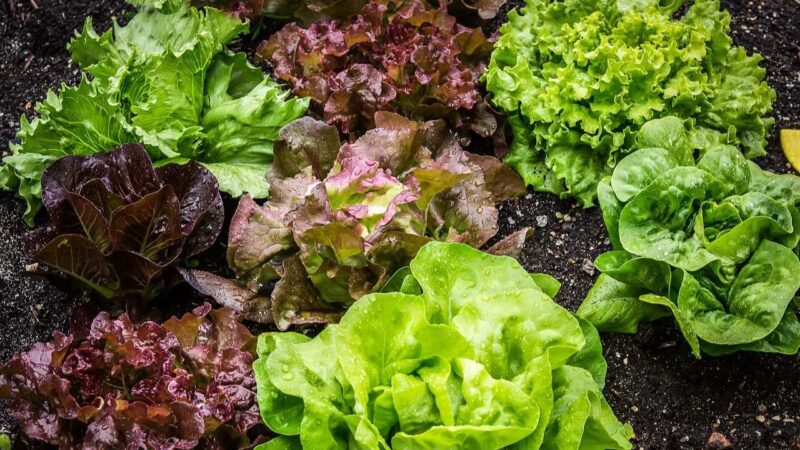
“We have developed a wide range of lettuce types, including romaine, iceberg and leaf lettuce,” Sandoya said. “The goal is to provide growers with options that perform well in different production systems and meet market demands.”
Early findings suggest the breeding lines may offer an added benefit. Researchers believe the same genetic resistance could help protect against Cercospora leaf spot, another disease that becomes more common in warm conditions and currently lacks effective control options especially in greenhouse production.
If confirmed, the work could lead to one of the first public lettuce cultivars with resistance to multiple major diseases, offering a significant advantage to growers.
Once the strongest lines are identified, the team will increase seed production, prepare varieties for mechanical planting and host field demonstrations to encourage adoption by growers and industry partners.
“Our goal is to deliver solutions that work for growers in the field and provide high quality produce for consumers,” Sandoya said. “We are getting very close.”
The post On the edge of a breakthrough: UF/IFAS breeding disease-resistant lettuce for U.S. farms, kitchens, written by Lourdes Mederos, first appeared in the UF/IFAS News blog.
The mission of the University of Florida Institute of Food and Agricultural Sciences (UF/IFAS) is to develop knowledge relevant to agricultural, human and natural resources and to make that knowledge available to sustain and enhance the quality of human life. With more than a dozen research facilities, 67 county Extension offices, and award-winning students and faculty in the UF College of Agricultural and Life Sciences, UF/IFAS brings science-based solutions to the state’s agricultural and natural resources industries, and all Florida residents.