From field to fork: UF scientists uncover the artichoke’s health power
Written by: Brad Buck, Senior Public Relations Specialist, UF/IFAS
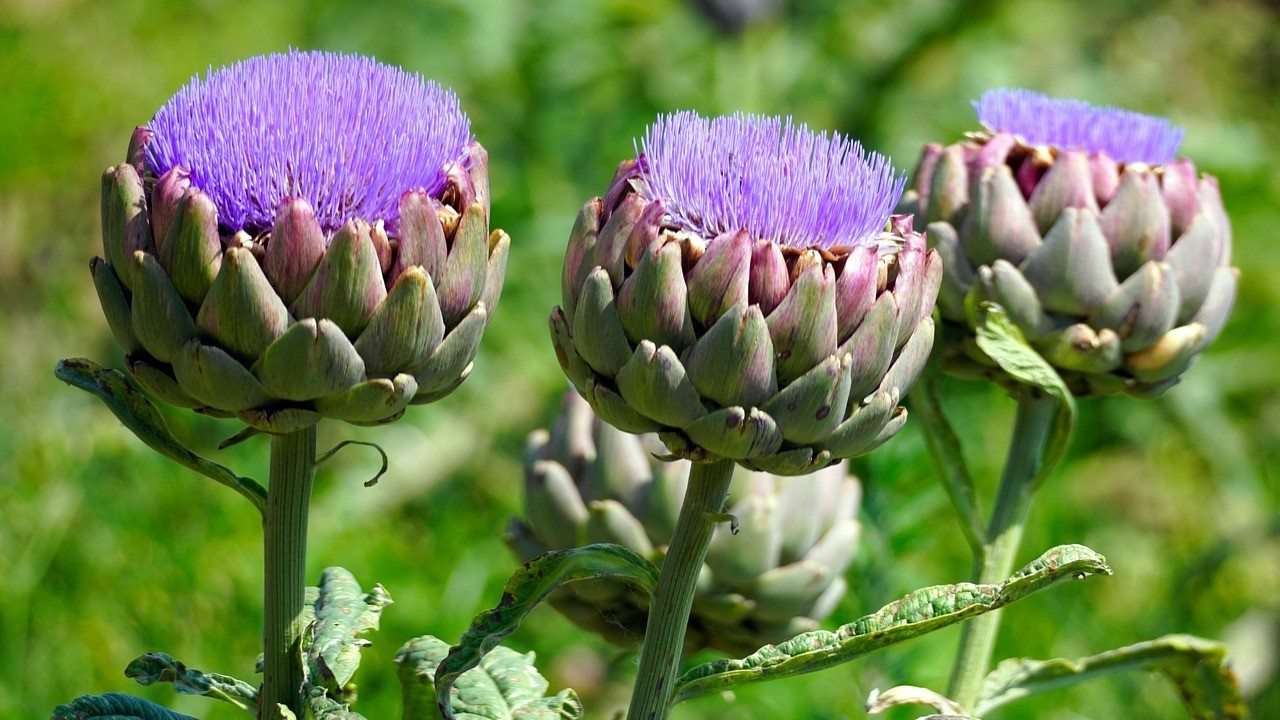
Are you craving a nutrient-packed bite to eat? The artichoke might just be your new super-snack, a University of Florida researcher says.
“Artichokes are not only a tasty vegetable, but they are also rich in nutrients that are good for our bodies,” said Tie Liu, an associate professor of horticultural sciences at the UF Institute of Food and Agricultural Sciences (UF/IFAS). They contain fiber, antioxidants and bioactive compounds that may help support heart health, digestion and overall wellness. “Because of these health benefits, artichokes can play an important role in healthy diets.”

A few dozen people, background, participated in the recent Artichoke Field Day at the Gulf Coast Research and Education Center. Credit: Alice Akers, UF/IFAS
But artichokes start losing nutritional value soon after they’re picked. To address this issue, Liu and Shinsuke Agehara are studying postharvest quality changes in artichokes grown at the UF/IFAS Gulf Coast Research and Education Center (GCREC). Through the study, they plan to identify ways to extend artichokes’ shelf life while maintaining the stability of health-beneficial compounds.
Agehara, a UF/IFAS associate professor of horticultural sciences, hosted an Artichoke Field Day on March 4 at GCREC.
During the event, Liu presented preliminary results of the study that he and Agehara are leading. Liu highlighted the relevance of their research to “Food is Medicine,” a UF initiative to show how food can help prevent diseases. The field day attracted 36 participants, including commercial growers and many home gardeners.
“After artichokes are harvested, they slowly begin to lose nutrients and freshness,” Liu said. “Our research focuses on finding better ways to store and handle artichokes, so they stay fresh longer and keep more of their healthy nutrients. This can help farmers reduce waste and deliver higher-quality produce to fresh markets and consumers.”
Artichokes are well-adapted to Mediterranean climates, where cool temperatures trigger bud formation, but the plants are sensitive to hard freezes. As a result, nearly all commercial artichokes in the United States are grown in California, where the mild coastal climate provides ideal conditions. This requires long-distance shipping to markets nationwide, increasing costs and postharvest losses.
Agehara has spent nearly a decade studying how to adapt artichokes to Florida’s warm, humid climate. To overcome limited winter chilling, his team developed a production system that uses gibberellic acid, a plant hormone that stimulates bud formation without natural chilling. When combined with proper cultivars, planting dates, fertilization and irrigation management, this approach can produce up to 15,420 pounds per acre — more than 90% of the average commercial yield in California.
Field day participants received a copy of the production guide. According to a post-event survey, 70% of attendees expressed interest in growing artichokes, while 24% said they were interested in expanding production.
Getting artichokes from farm to market is critical for growers and consumers.
“By growing nutritious vegetables and using good postharvest practices, farmers help provide foods that support health,” Liu said. “When fresh vegetables like artichokes reach consumers with good quality and nutrition, they can help people eat healthier without changing their diets too much. In this way, artichokes are more than just a crop, they are part of the solution for building healthier communities through food.”
The post From field to fork: UF scientists uncover the artichoke’s health power, written by Brad Buck, first appeared in the UF/IFAS News blog.
The mission of the University of Florida Institute of Food and Agricultural Sciences (UF/IFAS) is to develop knowledge relevant to agricultural, human and natural resources and to make that knowledge available to sustain and enhance the quality of human life. With more than a dozen research facilities, 67 county Extension offices, and award-winning students and faculty in the UF College of Agricultural and Life Sciences, UF/IFAS brings science-based solutions to the state’s agricultural and natural resources industries, and all Florida residents.