
Are Grapes Good for You?
Written by: Dr. Jelena Gligorijević, Chief Medical Officer, The Foundation for Fresh Produce
Grapes are among the world’s oldest domesticated crops, celebrated for their refreshing sweetness and diversity (1). Yet, many people hesitate to enjoy grapes due to concerns about sugar. So, what is the truth? Are grapes a healthy choice? The short answer is “Yes!”
How Many Calories in Grapes?
Fresh grapes are surprisingly low in calories, providing only 60–80 kcal per 100g.
Because they consist of 80–86% water, grapes are an incredibly hydrating snack.
Grapes contain virtually no fat, zero cholesterol, and no harmful trans-fatty acids (2).
While they do contain natural sugars, their high water content and low caloric density make them a satisfying snack for weight management. Their natural sweetness can effectively curb sugar cravings without the calorie spike of processed sweets.
Are Grapes Nutritious?
The Power of Phytonutrients
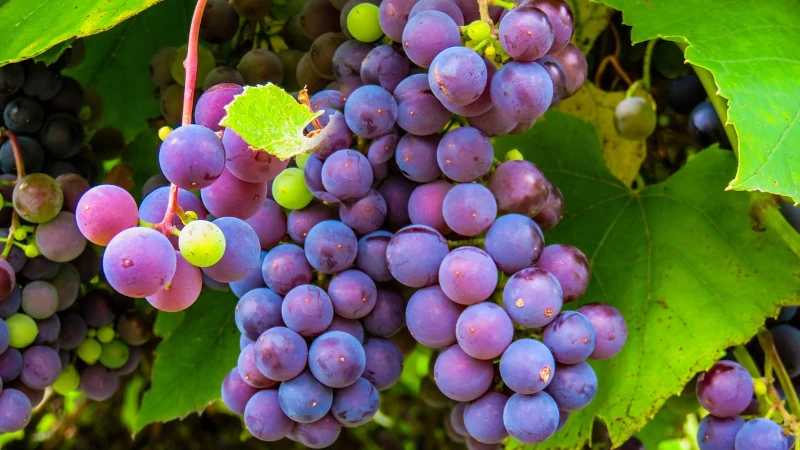
The real magic of grapes lies in their bioactive compounds—specifically flavonoids and resveratrol—found primarily in the skins and seeds, especially in purple and black grapes (3,4). These compounds provide a wide range of benefits:
- Antioxidant & Anti-inflammatory: Protecting cells from damage (5).
- Cardioprotective: Supporting heart health (6).
- Anti-cancer: Helping to inhibit the growth of cancer cells (7).
- Neuroprotective: Promoting brain longevity (8).
Grapes’ Benefits: Heart Health & Beyond
Grapes are rich in potassium (2), which helps lower blood pressure and reduces the risk of stroke and heart disease (9). Furthermore, grapes are very low in sodium (2), which provides an additional preventive effect.
Flavonoids and resveratrol, known for their antioxidant and anti-inflammatory properties, combined with low sodium and high potassium levels, contribute to supporting cardiovascular health (6).
Grapes are also rich in vitamin K, which plays a vital role in blood clotting and supporting bone health (10).
Are Grapes Ok to Eat if You Have Diabetes?
Grapes contain between 15 and 20 grams of carbohydrates per 100g of fresh fruit, depending on the variety and ripeness. These carbohydrates consist mostly of the sugars fructose and glucose (11).
The fiber content in grapes is around 0.9g, which is lower than in many other fruits (2).
Grapes generally fall into the low-to-medium glycemic index range meaning that despite their natural sweetness, they do not cause a dramatic spike in blood glucose levels (12). However, due to the high sugar content, people with diabetes should be cautious and consume them in moderation as part of a balanced diet. To further stabilize blood sugar, adding a handful of nuts or a serving of cheese can slow the absorption of sugar into the bloodstream.
Due to individual variations in glycemic responses to the sugars in grapes (13), it could be useful for people with diabetes—especially those on insulin therapy—to check their blood glucose levels after consumption.
How to Enjoy Grapes
While fresh grapes are a classic snack or dessert on their own, they bring a burst of flavor that can enhance salads, smoothies, and yogurt bowls, or complement your favorite selection of cheeses.
Here are some fantastic new ideas for serving grapes: Fruits and Veggies: Top 10 Ways to Enjoy Grapes.
And much more exciting recipes, you can find right here.
Keep in mind: You should eat a variety of colorful fruits and veggies every day—aim for 2 portions of fruit and 3 of vegetables (14,15).
The post Are Grapes Good for You?, written by Dr. Jelena Gligorijević, first appeared in The Foundation for Fresh Produce’s Have A Plant® blog.
References
- Myles S, Boyko AR, Owens CL, Brown PJ, Grassi F, Aradhya MK, et al. (2011). Genetic structure and domestication history of the grape. Proceedings of the National Academy of Sciences (PNAS), 108(9), 3530–3535. https://doi.org/10.1073/pnas.1009363108
- U.S. Department of Agriculture, Agricultural Research Service. FoodData Central https://fdc.nal.usda.gov/
- Zhou DD, Li J, Xiong RG, Saimaiti A, Huang SY, Wu SX, et al. Bioactive Compounds, Health Benefits and Food Applications of Grape. Foods. 2022 Sep 7;11(18):2755. https://www.mdpi.com/2304-8158/11/18/2755
- Salehi B, Mishra AP, Nigam M, Sener B, Kilic M, Sharifi-Rad M, Fokou PVT, et al. Resveratrol: A Double-Edged Sword in Health Benefits. Biomedicines. 2018 Sep 9;6(3):91. https://www.mdpi.com/2227-9059/6/3/91
- Magrone T, Magrone M, Russo MA, Jirillo E. Recent Advances on the Anti-Inflammatory and Antioxidant Properties of Red Grape Polyphenols: In Vitro and In Vivo Studies. Antioxidants (Basel). 2019 Dec 31;9(1):35. https://www.mdpi.com/2076-3921/9/1/35
- Sabra A, Netticadan T, Wijekoon C. Grape bioactive molecules, and the potential health benefits in reducing the risk of heart diseases. Food Chem X. 2021 Oct 27;12:100149. https://www.sciencedirect.com/science/article/pii/S2590157521000377?via%3Dihub
- Singh CK, Siddiqui IA, El-Abd S, Mukhtar H, Ahmad N. Combination chemoprevention with grape antioxidants. Mol Nutr Food Res. 2016 Jun;60(6):1406-15. doi: 10.1002/mnfr.201500945. https://onlinelibrary.wiley.com/doi/10.1002/mnfr.201500945
- Bird RJ, Hoggard N, Aceves-Martins M. The effect of grape interventions on cognitive and mental performance in healthy participants and those with mild cognitive impairment: a systematic review of randomized controlled trials. Nutr Rev. 2022 Feb 10;80(3):367-380. https://academic.oup.com/nutritionreviews/article/80/3/367/6285577
- Aburto NJ, Hanson S, Gutierrez H, Hooper L, Elliott P, Cappuccio FP. Effect of increased potassium intake on cardiovascular risk factors and disease: systematic review and meta-analyses. BMJ. 2013 Apr 3;346:f1378. https://www.bmj.com/content/346/bmj.f1378
- National Institutes of Health (US), Office of Dietary Supplements. Vitamin K fact sheet for health professionals. https://ods.od.nih.gov/factsheets/vitaminK-HealthProfessional/
- Zhong H, Yadav V, Wen Z, Zhou X, Wang M, Han S, Pan M, Zhang C, Zhang F, Wu X. Comprehensive metabolomics-based analysis of sugar composition and content in berries of 18 grape varieties. Front Plant Sci. 2023 Jun 9;14:1200071. https://www.frontiersin.org/journals/plantscience/articles/10.3389/fpls.2023.1200071/full
- The University of Sydney Glycemic Index Database. https://glycemicindex.com/
- Wu Y, Ehlert B, Metwally AA, Perelman D, Park H, Brooks AW, Abbasi F, et al. Individual variations in glycemic responses to carbohydrates and underlying metabolic physiology. Nat Med. 2025 Jul;31(7):2232-2243. https://www.nature.com/articles/s41591-025-03719-2
- U.S. Department of Agriculture; U.S. Department of Health and Human Services. Dietary guidelines for Americans, 2025–2030. 10th ed. Washington (DC): U.S. Government Publishing Office; 2025. https://www.dietaryguidelines.gov/
- U.S. Department of Agriculture; U.S. Department of Health and Human Services. Dietary guidelines for Americans, 2020–2025. 9th ed. Washington (DC): U.S. Government Publishing Office; 2020. https://www.dietaryguidelines.gov/about-dietary-guidelines/previous-editions/2020-dietary-guidelines