Dr. Marion Nestle, longtime NYU professor of nutrition, food studies, and public health, with additional faculty roles at UC San Francisco and Cornell, is best known for analyzing the intersections of food, politics, and health, often exposing how government policy, corporate lobbying, and food industry marketing shape what we eat.
Artificial sweeteners: risks vs. benefits?
The FDA says artificial sweeteners are safe at current levels of use. It has established Acceptable Daily Intakes for most of them. These levels are much, much higher than anyone is likely to consume in a day.
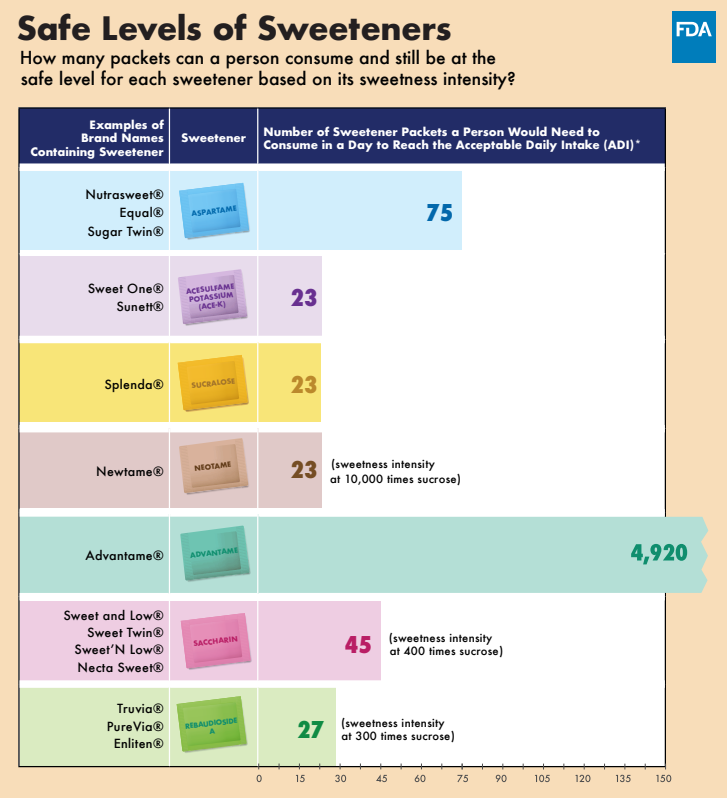
But: The benefits and risk of these sweeteners continue to be debated.
The Benefits?
- Rethinking sweetness in an age of sugar skepticism: As shoppers scrutinize labels and headlines, brands are rethinking sweetness strategies to deliver lower sugar, clearer messaging and commercially viable reformulations… Watch now
- Scientists closer to solving sugar reduction’s taste problem: After years of compromise, sweetness without sacrifice may finally be within reach… Read more
- Sweet proteins: The future of clean-label sugar reduction: How are new innovations in the sweet ingredients space challenging the assumption that taste needs to be compromised when formulating clean-label, better-for-you food and beverages?… Read more
The Risks?
- Sweeteners under fire as scientists probe neurological risks; New research linking popular sweeteners to cognitive decline has again raised concerns over their safety. What does this mean manufacturers?… Read more
- Sweeteners back in the spotlight as scientists probe liver disease risks: Once hailed as a reformulation fix, sweeteners are now facing growing scientific scrutiny… Read more
- Common Sweetener May Harm Critical Brain Barrier, Risking Stroke: Found in everything from protein bars to energy drinks, erythritol has long been considered a safe alternative to sugar. But research suggests this widely used sweetener may be quietly undermining one of the body’s most crucial protective barriers – with potentially serious consequences for heart health and stroke risk.
Comment
I continue to be baffled by artificial sweeteners. I don’t knowingly eat them. I don’t eat anything artificial, and I particularly do not like the taste of alternative sweeteners. If I want to avoid sugar, I can and do. Substitutes don’t work for me.
With that said, how harmful are they? I wish I knew. Plenty of studies suggest harm. But the science is especially hard to do because sweeteners are typically consumed in such small amounts.
My advice about artificial sweeteners? Avoid them if you can; they might be harmful and they are markers of ultra-processed foods. If you cannot or do not want to avoid them, try to keep intake as low and infrequent as possible. As with everything else in nutrition, the best way to prevent problems is to eat a wide variety of relatively unprocessed foods in small amounts.
Additional resources
Gary Ruskin reminds me that US Right to Know has fact sheets on sweeteners.
The post Artificial sweeteners: risks vs. benefits? appeared first on Food Politics by Marion Nestle.
Marion Nestle is Paulette Goddard Professor of Nutrition, Food Studies, and Public Health, Emerita, at New York University, which she chaired from 1988-2003 and from which she officially retired in September 2017. She is also Visiting Professor of Nutritional Sciences at Cornell. She earned a Ph.D. in molecular biology and an M.P.H. in public health nutrition from the University of California, Berkeley, and has been awarded honorary degrees from Transylvania University in Kentucky (2012) and from the City University of New York’s Macaulay Honors College (2016). In 2023, she was awarded The Edinburgh Medal (for science and society).