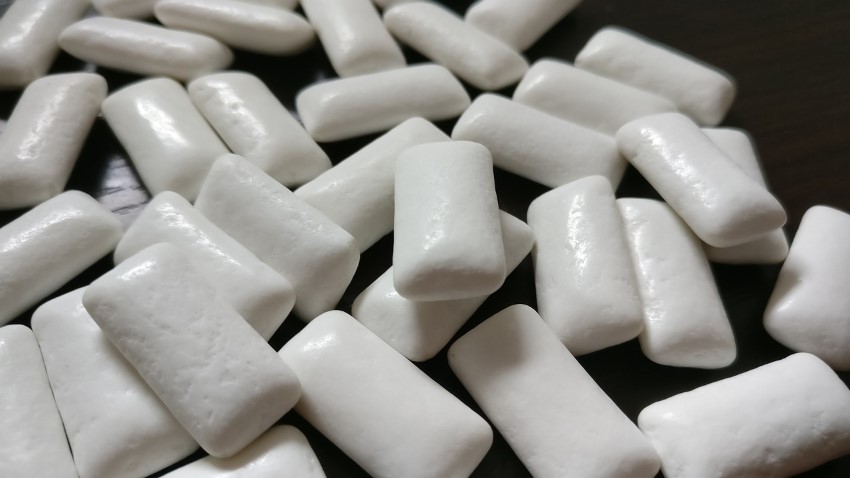
Researchers in Morocco develop method for turning syenite rock into cheaper, more-efficient alternative to regular potassium fertilizer
Written by Brain Owens, Canadian Light Source
African soils, especially in central Africa, are rich in organic matter and have lots of water, but farmers still need fertilizers to provide important macronutrients like potassium, which strengthens plants’ ability to absorb water, improves disease resistance, and increases crop yields. Most potassium fertilizers come from potash, mined from underground deposits formed by ancient, evaporated seabeds.
However, potash is an imperfect source of potassium for African farmers for several reasons. First, it comes from far away – the biggest potash deposits are in the northern hemisphere, in Canada, Russia, and Germany, making it an expensive resource that is vulnerable to supply chain disruptions.
Second, the potassium salts in potash are highly soluble, so while the plants can take up some of the nutrient, large amounts leach away into the groundwater and surface water and are lost. Finally, the chlorine in the fertilizer contributes to soil salinity and pollutes groundwater.
Abdellatif Elghali, professor at University Mohammed VI Polytechnic in Benguerir, Morocco, and his colleagues have been looking for ways to turn local potassium-rich syenite rocks into a cheaper and more efficient alternative fertilizer.
“We have a lot of potassic silicates like feldspars that have a non-negligible concentration of potassium. But the problem is they have a very strong crystalline structure, so they are not going to provide a sufficient amount of potassium to support the plants,” he said.
The team developed a process to convert the rocks into a form that would enable them to release their potassium. They crushed the rocks to increase the available surface area, added water and alkaline or acidic agents, then heated the mixture to just under 200oC to convert the minerals from an insoluble to a soluble state.
When soaked in water the modified rocks released an initial fast burst of potassium and calcium, then continued to release the minerals more slowly over time as well as other nutrients that are good for the soil and plant health including silicon and magnesium. Lab tests also found that plants like corn and soya could take up the nutrients just as well as from conventional potash fertilizer.
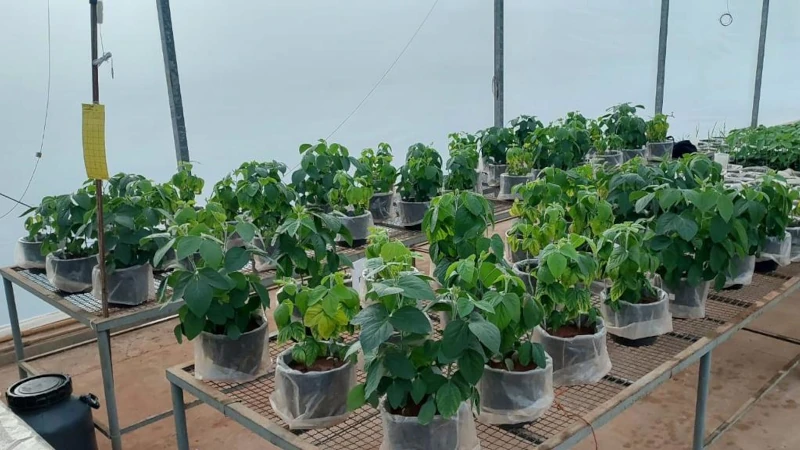
Treated syenite showed promising agronomic performance in acidic soils.
“Based on the results of the chemical leaching test and the agronomic test, the conclusion is yes, it could work,” said Elghali. The results were published in the journal Minerals Engineering.
The CLS was vital to understanding how the chemical and heat treatment liberated the potassium and allowed it to be taken up by the plants. “Basic lab techniques didn’t give us enough information about the mechanism,” he said. The team used intensely bright synchrotron light at the CLS to conduct detailed analyses on the modified rocks.
The next steps are to conduct larger field tests to ensure the new fertilizer works at scale and to fine tune the process to ensure it is easy and cost-effective to produce.
Elghali said the biggest benefit from this project is the opportunity to use his scientific expertise to help improve the lives of people in Africa and around the world.
“Sometimes impact does not come from papers or numbers or citations,” he said. “The real impact is the social one. If you can change the life of someone, this is the real impact that we should look for when doing science.”
The post Fertilizer made from local rocks could help feed hungry in Africa, written by Brain Owens, first appeared in the Canadian Light Source Newsroom.