A note on the current Cyclospora outbreak (updated 7/24/26): Good produce hygiene is always worth it – but no washing method, including “triple washed” bagged greens, is guaranteed to remove every pathogen, including the parasite behind the current multistate cyclosporiasis outbreak. This parasite tends to stick to produce more than many others do. Cooking produce to 158°F or higher kills Cyclospora.
For the latest information on the investigation, including any public health recommendations, check FDA’s current recalls and follow CDC’s active outbreak page for updates.
How do I properly wash fruits & vegetables?
Written by Christina Ferreira, Ph.D., Vice President of Food Safety & Quality at the International Fresh Produce Association (IFPA)
Check your produce for bruising
Check fruits and veggies for signs of cuts or bruising before buying them. If the produce is damaged, cut away the damaged or bruised area before preparing or eating. If buying pre-cut fruits or veggies or bagged salads, make sure the product is refrigerated or on ice in the store.
Clean hands, surfaces & utensils
Wash your hands for 20 seconds with soap and water before and after preparing fresh produce, then dry them with a clean towel. Clean all surfaces and utensils with hot water and soap, including cutting boards and knives, before and after preparing fresh fruits and veggies.
Rinse fruits & veggies just before eating
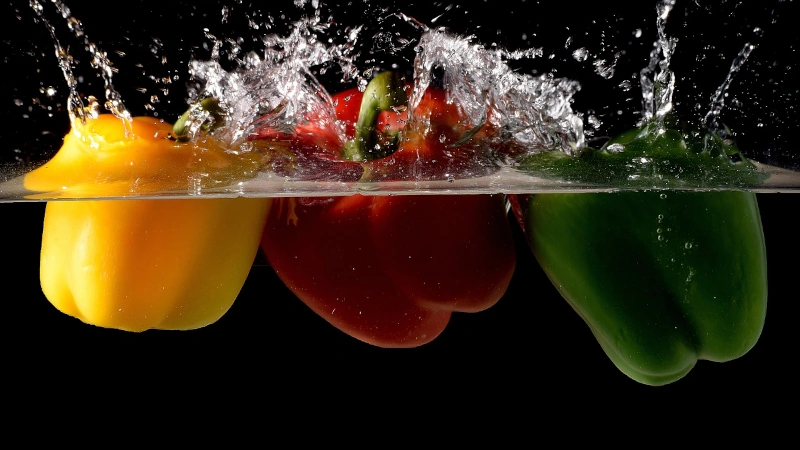
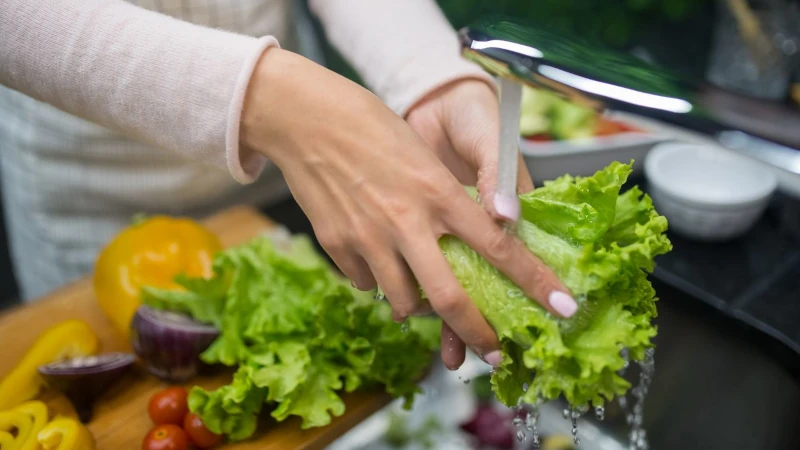
Just before use and before peeling, rinse the produce under running water. This step matters even for produce you plan to peel, like melons, oranges, or avocados. When you cut into unwashed produce, anything on the outer surface can transfer onto your knife and into the part you’re about to eat, so give it a rinse first either way.
Gently rub produce while holding it under plain running water. There’s no need to use soap or a produce wash. Plain running water works just as well as specialty produce washes or vinegar rinses, so you don’t need to buy anything extra. Use a clean vegetable brush to scrub firm fruits and veggies, such as melons and cucumbers.
Packaged fruits and vegetables labeled “ready-to-eat,” “washed” or “triple washed” should not be washed.
Dry produce with a clean cloth or paper towel.
Remove the outermost leaves of a head of lettuce or cabbage before using.
Separate from raw meat, poultry, seafood, eggs & household chemicals
In your shopping cart and in bags at checkout, separate fresh produce from household chemicals and raw meat, poultry, seafood and eggs.
In your refrigerator, keep fresh fruits and veggies separate from these items, as well.
When preparing food, keep fresh fruits and veggies separate from raw meat, poultry seafood, and eggs. Do not use the same cutting board or utensils without cleaning with hot water and soap before and after preparing fresh produce items.
It’s also a good habit to wash your reusable grocery bags regularly, since they can pick up bacteria from raw meat or other items over time.
Chill cut fresh produce within two hours
Chilling your fresh produce within two hours of preparing helps to prevent bacterial growth. Keep your refrigerator at or below 40°F.
If cut produce has been sitting out for more than two hours, it’s best to toss it rather than risk it.
Visit the Food & Drug Administration (FDA) for additional tips on handling and cleaning fresh produce.
The post How do I properly wash fruits & vegetables?, written by Christina Ferreira, Ph.D., first appeared in The Foundation for Fresh Produce’s Have A Plant® blog.