“Vidalia onions aren’t just the most famous onions in the world; I think they may be the only famous onions in the world.” – Chef Bobby Flay
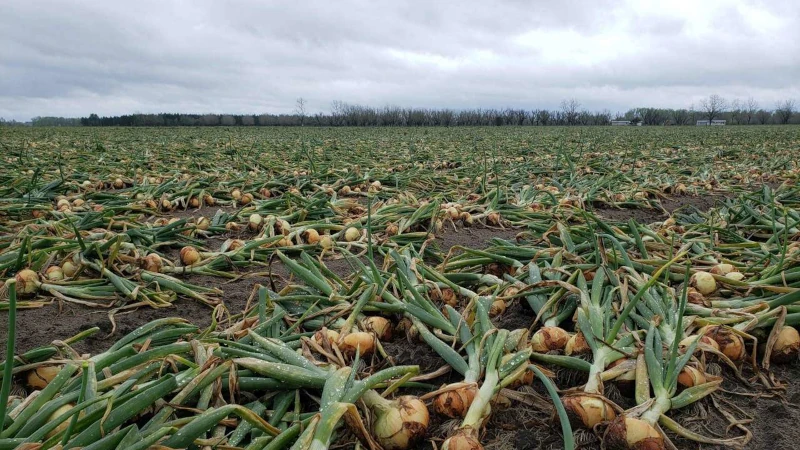
This time of year, the 50-mile radius surrounding Vidalia, Georgia is a basically a non-stop sea of green. It’s all the onions, those wonderful sweet but somehow still savory Vidalia onions we only get from spring through summer. And those amazing onions are officially heading to market today, April 13. By this weekend they’ll be in stores across the country.
In fact, Vidalias have become a sign of spring, like the start of baseball season and pools reopening. They’re obviously a Southern favorite. But they’re even more eagerly anticipated in the Northeast as a sign that it’s safe to go back outside.
As Chef Flay sagely noted, Vidalia’s are indeed world-famous – if you don’t know about ‘em, you’re the one who’s out of the loop. They’ve been onboard for Hollywood movies and driven campaigns promoting Nashville’s also world-famous music. They’re in-demand by chefs and consumers alike. And they always sell out by early September. Every time.
So today, the region is still that shimmering sea of emerald green. But with a flick of the switch, the tractors start to roll. In mere days, the green is gone and the Vidalia onion crop is sitting aboveground, ready to dry for a bit and then start making its way to you starting in mid-April. It’s a dramatic quick shift in scenery.
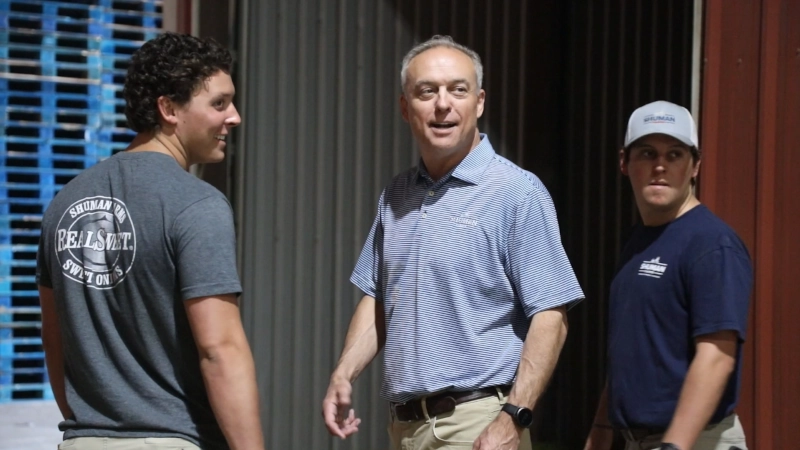
John Shuman’s been watching that happen for over 50 years – not coincidentally, that’s how long the President and CEO of Shuman Farms has been on the planet. Astonishingly, in agricultural terms, where we think of everything being as old as apples, he was among the first generation to be born into today’s Vidalia onion business.
That’s because the Vidalia onion was nothing more than a happy accident, a blessed coincidence. It should have never happened. But about 100 years ago, it did.
You can see more about Vidalia Onions and the Shuman Family in these episodes of Where The Food Comes From our YouTube channel YouTube@WhereTheFoodComesFrom
In the 1930s, an onion farmer in Vidalia named Mose Coleman had a contract with a local grocer to deliver a spring crop of conventional fiery-hot onions. Onions aren’t planted from seed in the fields – they’re handset as small green shoots (hand-harvested, too, by the millions and millions). A late freeze wiped out Coleman’s crop and he couldn’t find more seedlings anywhere. He was frantic and facing ruin. He finally found a farmer out West who was willing to ship a train carload of an onion they were growing out there (you would recognize it today as a grandparent of the big, semi-sweet-but-still-quite-hot onion bomb you see deep-fried as an appetizer to pick on in steakhouses).
But when that onion was planted in the South Georgia soil, it came up so sweet you could eat it like an apple (and people do). Coleman thought he was ruined. But the store manager was desperate and decided to give ‘em a try. As you know by now, those were Vidalia onions and they were an instant hit.
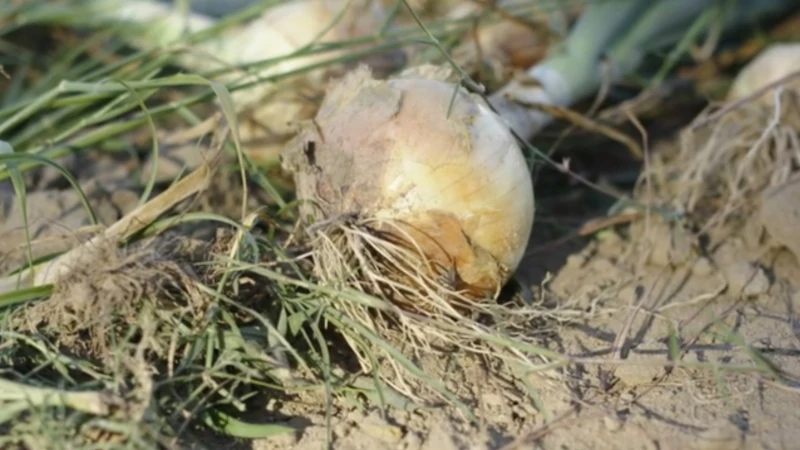
But only with the locals. Amazingly, folks pretty much just kept the news to themselves. Over years, the reputation began to grow and travelers would come through looking for “those sweet onions from Vidalia.” A legend was blooming.
But it wasn’t until the 1980s that some farmers with marketing savvy realized the Vidalia onion just might be of interest to people outside the 50-mile region where they’re officially grown. An industry was born – and fast.
By the 1990s, Vidalia growers had organized into the Vidalia Onion Committee and gotten a federal marketing order to protect the crop. By law, only granex variety onions grown in the 19 counties and parts of three others surrounding the namesake town can be called Vidalia. The trademark – now owned by the State of Georgia – is vigorously protected. New varieties are constantly under development to make the world’s best onion even better.
And no, the same onion planted elsewhere will not taste like a Vidalia. That’s a function of the unique soil in the region, the rich, sandy, low-sulphur result of years of tectonic shifts as the continent was forming. There’s no other area like it anywhere in the world.
That’s the world John Shuman was born into. His father was an onion farmer, but before the big boom. Mr. Buck Shuman was also a plant breeder, and his work created varieties that accelerated Vidalia’s success. Mr. Buck’s no longer with us, but several of the varieties he bred are still on your plate today.
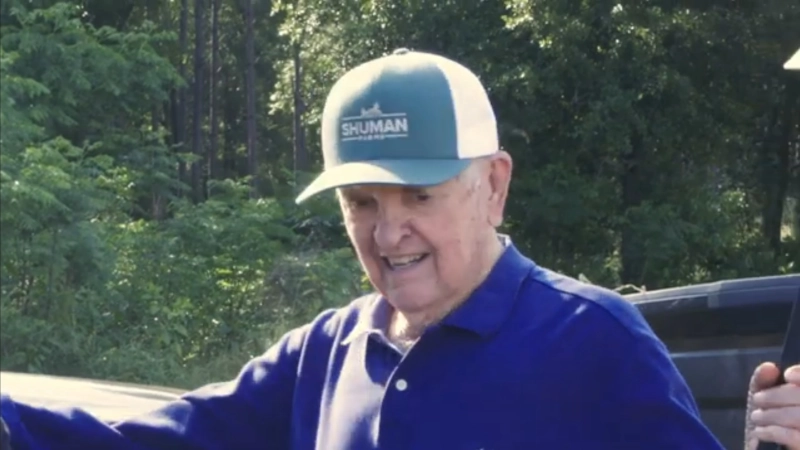
Mr. Buck Shuman
It’s a legacy John Shuman cherishes. The farm crisis of the 1980s meant John didn’t have much to come home to after college. So he started a company to sell Vidalias that other farmers grew. It was tough sledding. But John’s a tough customer. Before long, his company had its own label on the market and it’s likely the most predominant one you’ll see today: RealSweet (you’ll also see Shuman onions in some supermarkets under the newer Mr. Buck’s label).
John had partnered up with some of the area’s finest growers to produce an exclusive, premium crop that he would market. But he was born into farming and he knew to fully realize his dream and mission he needed to be in that side of the game personally. That ambition paved the way for Shuman Farms. Today John’s own farms, along with his longtime partners, provide the best of the best of the Vidalia crop (and also one of the largest portions of it).
They’ll be doing that for some time to come. John’s oldest son, Luke, graduated from the University of Georgia two years ago and came home to join the business, Now younger son Jake is becoming part of it all as well.
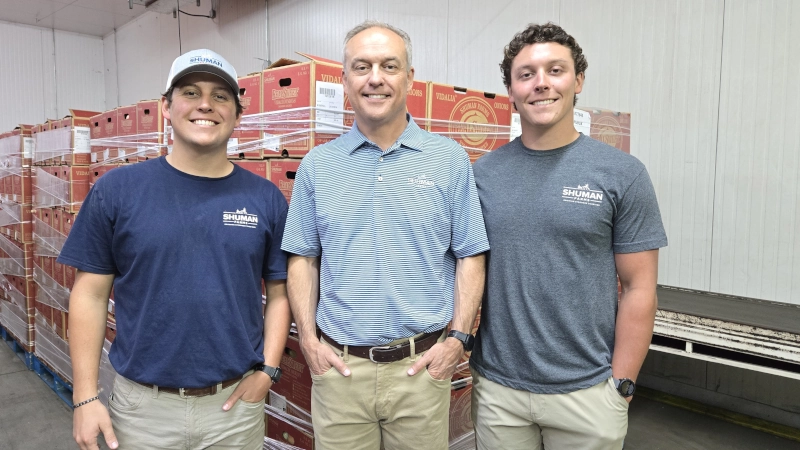
(L-R) Luke, John, and Jake Shuman
It’s a blessing come to life for John and wife Lana, who recently retired after teaching a couple of generations of kindergarteners in their hometown of Reidsville.
“I’ve always had a deep appreciation for this land, this community and this onion,” John says. “The road hasn’t always been easy, and I’ve been fortunate to have a lot of good people around me along the way. To see how far we’ve come – and now have the boys take an interest in continuing what we’ve built – it means the world to me. That’s more than I could’ve hoped for.”