Dietitian Q&A: How to Go Heart-Healthy
Written by: Emily Holdorf, MS, RDN
Heart disease, also known as cardiovascular disease (CVD), refers to several conditions that affect the heart and blood vessels. These include high blood pressure, heart attack, heart valve problems, heart failure, and stroke. Many of these conditions are linked to plaque buildup in the arteries. Over time, this buildup can harden and narrow blood vessels, limiting healthy blood flow.
If you’ve been diagnosed with heart disease, talk to a healthcare professional (such as your physician or a registered dietitian). They can help you create a personalized treatment plan to manage your specific condition. Typical treatment may include healthy eating, exercise, surgeries, or medications.
Fruits and veggies play a key role in a heart-healthy diet and help prevent and manage heart disease.
- Fruits and veggies are naturally rich in fiber and potassium, which help support healthy blood pressure, keep cholesterol in check, and help your heart work better day to day.
- Fruits and veggies are packed with vitamins, minerals, and plant compounds, like antioxidants and phytochemicals, that help reduce inflammation and protect blood vessels – key for keeping your heart healthy over time.
What does “heart-healthy” really mean?
In general, eating heart-healthy means eating an overall healthy diet. This can look like:
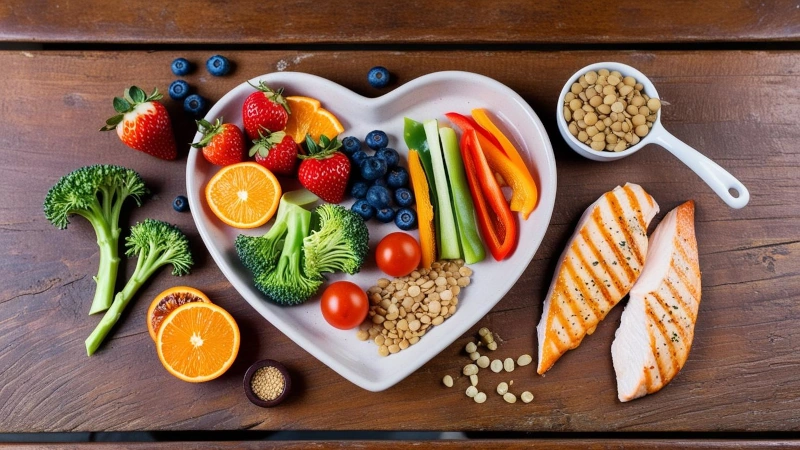
- Eating a variety of colorful, nutrient-dense fruits and veggies
- Focusing on fiber-rich whole grains
- Prioritizing lean protein foods (such as lean meat and poultry, legumes, fish, seafood)
- Including low-fat or fat free dairy products
- Incorporating healthy fats (such as canola oil, olive oil, avocado, nuts, fatty fish)
- Being mindful of added sugars, saturated fat, and sodium
It’s really about patterns, not perfection. A heart-healthy eating pattern can work whether you’re cooking at home, ordering at a restaurant, or choosing prepared foods at the grocery store.
You can also look for the Heart-Check mark to help find foods certified by the American Heart Association as part of a heart-healthy eating pattern.
How food choices affect your heart
Following a heart-healthy eating pattern matters because food plays a direct role in many of the factors that influence heart health. Over time, daily food choices can either support or strain the heart and blood vessels.
These are the main ways food choices affect your heart day to day:
- Blood pressure. Eating patterns that include potassium-rich, fiber-containing foods – like fruits and veggies – help support healthy blood pressure by balancing sodium intake and supporting proper blood vessel function.
- Cholesterol levels. Fiber-rich foods can help lower LDL cholesterol, reducing the buildup of plaque in arteries and supporting healthy blood flow.
- Blood sugar control. Meals and snacks that include fiber help slow digestion and keep blood sugar levels steadier, which is especially important since elevated blood sugar increases the risk of heart disease.
- Body weight and fullness. Foods with high water and fiber content help you feel satisfied after eating, supporting healthy weight management – an important factor for heart health.
- Inflammation and blood vessel health. Antioxidant-rich foods help reduce chronic inflammation and protect blood vessels, both of which play a role in the development and progression of heart disease.
The goal is to choose foods that are good for your heart in multiple ways. Fruits and veggies check many of those boxes at once, which is why they’re regularly recommended for both preventing and managing heart disease.
Simple ways to eat more fruits & veggies
Eating more fruits and veggies for heart health doesn’t have to mean overhauling your routine or cooking every meal from scratch. Small, everyday shifts can add up – especially when they’re built into foods and meals you already enjoy.
Here are a few easy ways to start:
- Add fruits & veggies throughout the day. Heart-healthy eating isn’t limited to one meal. Adding fruits and veggies at breakfast, lunch, dinner, and snacks helps spread out fiber and nutrients and supports heart health every time you eat.
- Add fruit to breakfast or snacks. Pair fruit with foods you’re already eating – like adding berries to yogurt, slicing a banana onto toast, or grabbing an apple or orange for an afternoon snack.
- Build meals around veggies. Instead of treating veggies as a side dish, let them take center stage. Start with veggies when planning meals – think stir-fries, soups, salads, grain bowls, or roasted veggie trays – and add protein and grains from there.
- Mix it up for convenience. Frozen and canned fruits and veggies are a convenient way to add variety. Many are pre-washed and ready to use, saving time and reducing food waste.
Heart-healthy resources
Need a quick resource to reference? Have more questions? Check out these trusted organizations to learn more and connect with experts.
Academy of Nutrition & Dietetics
The post Dietitian Q&A: How to Go Heart-Healthy, written by registered dietician Emily Holdorf, first appeared in The Foundation for Fresh Produce’s Have A Plant® blog.