
Ultra-Processed Foods Linked to Brain Differences in Young Children
CHLA researchers found measurable changes in brain structure but no differences in cognitive performance.
Written by: Parker Danowski, Children’s Hospital Los Angeles
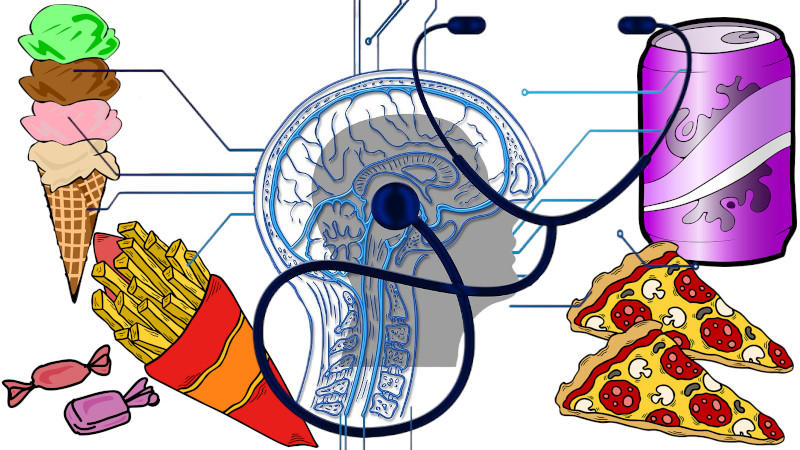
Greater consumption of ultra-processed foods in early childhood is associated with lower volumes of several brain regions by age 6, according to new research led by Children’s Hospital Los Angeles.
The study, published in The American Journal of Clinical Nutrition– Opens in a new window, found that a 10% higher cumulative intake of these foods was associated with a nearly 2% lower volume of subcortical brain structures, including the accumbens, amygdala, pallidum, putamen, and thalamus—which are involved in functions such as reward processing, emotion, and motivation.
The study did not find a link between ultra-processed food consumption and cognitive performance.

Jonatan Ottino-González, PhD
The research was led by first author Jonatan Ottino-González, PhD, and senior author Michael I. Goran, PhD, and supported by the National Institutes of Health.
“Our findings suggest that what children eat early in life may shape brain development in ways we’re just beginning to understand,” says Dr. Goran, Director of the Nutrition and Obesity Program in The Saban Research Institute at Children’s Hospital Los Angeles. “Even without differences in cognitive performance, we’re seeing measurable changes in brain structure.”
A critical window for brain development
Ultra-processed foods are industrial products made from refined ingredients and additives and designed for convenience and long shelf life. These items contain little to no whole foods and feature additives such as sweeteners, flavorings, emulsifiers, or other ingredients included for purely cosmetic or aesthetic purposes. They may also contain substances intended to compensate for nutrients that are lost during processing.
Examples of ultra-processed foods include certain fast foods, frozen meals, baked goods, lunchmeats, and dairy products. In the United States, ultra-processed food makes up more than half of the total energy intake of children ages 1 to 5.
This early childhood period is a critical one for brain development and is characterized by enhanced neuroplasticity—the ability of the brain to reorganize its neural connections. Diet quality during this time has also been observed to possibly influence neurodevelopment.
In previous research studies, higher consumption of ultra-processed food has been linked to adverse cognitive and brain volume-related outcomes in adults, including cognitive impairment and dementia. Investigators have reported a reduction in attention, working memory, and inhibitory control among adults in the these studies, as well as lower volume of certain brain regions. Additionally, longitudinal studies have shown that the volume of subcortical brain regions in early life is linked with later physical and mental health.

Michael I. Goran, PhD
Based on this previous evidence, Dr. Goran’s team hypothesized that ultra-processed food consumption in early childhood could be linked with reduced volume of particular brain regions and adverse cognitive outcomes years later. However, the effects of ultra-processed food specifically on children and adolescents have not been well studied, and neuroimaging evidence has been limited.
The new CHLA study followed 144 Latino/Hispanic mother-infant pairs and assessed children’s intake of ultra-processed food at 6, 12, 24, and 72 months using repeated 24-hour dietary recalls.
Investigators also tested cognitive performance at 24 and 72 months, first through language and motor skill evaluations, and later using a computerized battery that assessed memory, processing speed, and attention. The team measured subcortical brain volumes using MRI at 72 months. The children’s weight and height were tracked throughout the study.
Next steps
The team now aims to clarify critical exposure windows, identify specific nutritional and biological mechanisms, and better understand the long-term implications of ultra-processed food consumption during early childhood.
“We still have much to learn about how early dietary exposures influence the developing brain,” says Dr. Goran. “Identifying the underlying mechanisms will be important for understanding what these findings mean for long-term health.”
Learn more about the Center for Endocrinology, Diabetes and Metabolism at CHLA.
The post Ultra-Processed Foods Linked to Brain Differences in Young Children, written by Parker Danowski, first appeared in the CHLA Newsroom.