Dr. Marion Nestle, longtime NYU professor of nutrition, food studies, and public health, with additional faculty roles at UC San Francisco and Cornell, is best known for analyzing the intersections of food, politics, and health, often exposing how government policy, corporate lobbying, and food industry marketing shape what we eat.
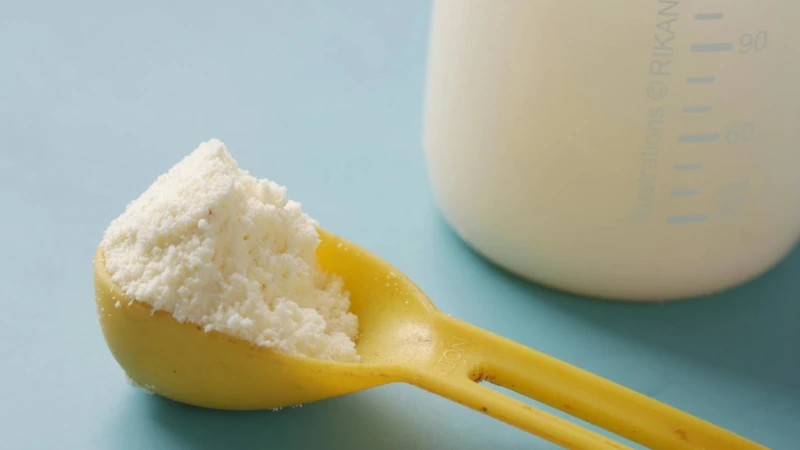
Botulism in infant formula: Companies must prevent this. Now.
I know I just wrote about botulism in powdered infant formula but it upsets me so much that I have to do it again.
We now have a second outbreak, first ByHeart now Nara, both linked to contaminated organic whole milk from the same German supplier.
Yes, botulism in infant formula is rare, but not nearly rare enough. You do not want your infant to be one of the unlucky ones.
I’m trying to understand how this could happen and how it can be stopped.
The clearest explanation comes from food safety lawyer, Bill Marler, who represents families of those unlucky babies.
Let me summarize.
- Botulism comes from bacterial spores (“seeds”) that can germinate in an infant’s intestine, releasing botulinum toxin.
- The spores came from Clostridium botulinum in dirt. Somehow, the dirt got on the cows and the spores got into their milk.
- Spores resist drying and heat; they survive Pasteurization and the drying that happens when milk is turned into powder.
- Spores can germinate in infants’ digestive tracts and produce botulinum toxin (older children and adults have immunity)
- The fat in whole milk may protect the spores (the ByHeart and Nara formulas are whole milk)
- Pasteurized powdered milk is not sterile; it can contain botulinum spores.
What can parents of bottle-fed infants safely feed them?
The only option is an expensive one: Ready-to-feed formula previously sterilized at temperatures high enough to kill spores.
How about preventing spores in the first place?
This is not easy, according to a study of just this question in the International Dairy Journal: Towards low-spore milk powders: A review on microbiological challenges of dairy powder production with focus on aerobic mesophilic and thermophilic spores (Thanks to Kristin Schill for sending).
Here’s what this study says needs to be done to keep spore levels low:
- Membrane filtration or bactofugation
- Validation of cleaning protocols to avoid recontamination
- Sterilisation of heating equipment
- Development of evaporators that are to be sterilised
- Ensure the plant design is hygienic
- Avoid long production cycles for temperature-sensitive steps, i.e., separation, pasteurisation and evaporation
- In other words, prevention requires a clean farm, clean udders, filtration, a clean plant, and quick processing.
What about testing? It comes too late in the process and can’t always find rare contaminants.
And formula companies would rather not test for pathogens; if they find some, they have to issue recalls.
They also do not like to take responsibility; they would much rather finger point.
Nara did not want to reveal the name of its European supplier.
The risk of botulinum spores has been known for a long time, at least since 2013.
Marler, who keeps track of all the problems with powdered infant formula in the past few years, thinks Congress needs to pass the Infant Formula Safety Modernization Act of 2026, which requires much, much higher standards for and oversight of infant formula.
Here is Marler’s letter to Congress summarizing the rationale for and evidence in support of this act.
Congress: Please pass this, and right away. It will force formula companies to do what they should have been doing all along.
The post Botulism in infant formula: Companies must prevent this. Now. appeared first on Food Politics by Marion Nestle.
Marion Nestle is Paulette Goddard Professor of Nutrition, Food Studies, and Public Health, Emerita, at New York University, which she chaired from 1988-2003 and from which she officially retired in September 2017. She is also Visiting Professor of Nutritional Sciences at Cornell. She earned a Ph.D. in molecular biology and an M.P.H. in public health nutrition from the University of California, Berkeley, and has been awarded honorary degrees from Transylvania University in Kentucky (2012) and from the City University of New York’s Macaulay Honors College (2016). In 2023, she was awarded The Edinburgh Medal (for science and society).