
Dr. Marion Nestle, longtime NYU professor of nutrition, food studies, and public health, with additional faculty roles at UC San Francisco and Cornell, is best known for analyzing the intersections of food, politics, and health, often exposing how government policy, corporate lobbying, and food industry marketing shape what we eat.
Industry-funded studies of the week: peanuts and almonds
Nuts are a great snack but I am always skeptical when industry-funded studies find them to perform health miracles. Here are two parallel examples reported by SciTechDaily.
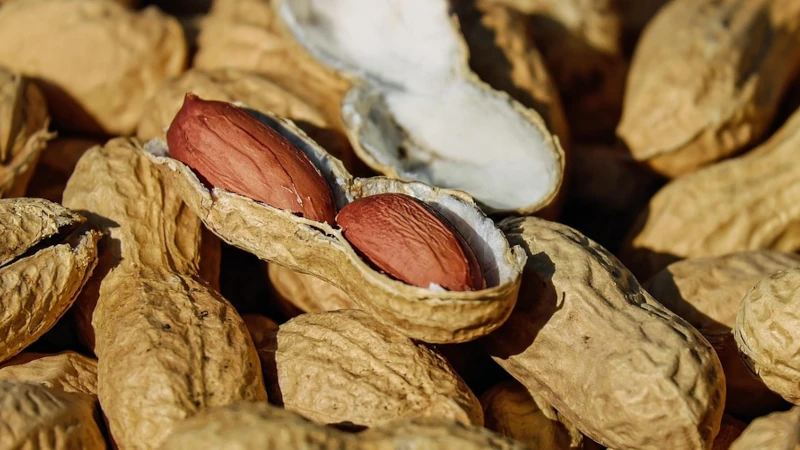
I. Scientists Discover That Eating Peanuts Every Day May Help Protect the Aging Brain: Peanuts may offer more than a convenient source of protein and healthy fats. New research suggests that eating them regularly could help the aging brain respond more effectively to insulin, a hormone that plays an important role in memory, learning, and communication between nerve cells. As people grow older, the brain can become less sensitive to insulin, a change linked to age-related cognitive decline.
- The study: “Daily consumption of unsalted, skin-roasted peanuts beneficially affects regional brain insulin responsiveness in older adults: results of a longer-term randomized controlled trial” by Kerkhof, Lucia, Mensink, Ronald P., Plat, Jogchum, Nijssen, Kevin M. R. and Joris, Peter J., 30 September 2026, Food & Function. DOI: 10.1039/d6fo03208g
- Funding: The NUTRIM study was supported by funding from The Peanut Institute Foundation. The funder did not have a role in the study design, implementation, analysis, or interpretation of the data or the writing of the manuscript.
II. Scientists Reveal That Eating Almonds Every Day Could Transform Your Gut, Metabolism, and Appetite: Replacing typical Western-style snacks with a daily serving of almonds may improve gut bacteria, lower several inflammatory signals, and increase hormones linked to fullness, according to a new controlled feeding study.
- The study: “Almond snacking modulates gut microbiome and metabolome in association with improved cardiometabolic and inflammatory markers” by Gwoncheol Park, Katelyn Johnson, Katelyn Miller, Saurabh Kadyan, Saiful Singar, Cole Patoine, Fuhua Hao, Yujin Lee, Andrew D. Patterson, Bahram Arjmandi, Penny M. Kris-Etherton, Claire E. Berryman and Ravinder Nagpal, 20 March 2025, npj Science of Food. DOI: 10.1038/s41538-025-00403-0
- Funding: The research was supported by funding from the Almond Board of California (ABC; ECP-Nagpal-NR-001) to RN. The findings in this publication have not been formally disseminated by the funders and should not be construed to represent any agency determination or policy.
Comment: As is almost always the case with studies involving one food, the operative words are “may” and “could.” When you see these words, note that they equally mean “may not” and “could not.” As shown by these examples, industry-funded studies commonly produce results interpreted as favorable to the sponsor’s products. Nuts are “real” foods, nutritious, delicious, and terrific to eat. Can eating them alone ensure cognitive function in old age or healthy metabolic function? Surely they contribute to healthy eating but it’s the total dietary pattern that makes the real difference. I do like peanuts and almonds….
The post Industry-funded studies of the week: peanuts and almonds appeared first on Food Politics by Marion Nestle.
Marion Nestle is Paulette Goddard Professor of Nutrition, Food Studies, and Public Health, Emerita, at New York University, which she chaired from 1988-2003 and from which she officially retired in September 2017. She is also Visiting Professor of Nutritional Sciences at Cornell. She earned a Ph.D. in molecular biology and an M.P.H. in public health nutrition from the University of California, Berkeley, and has been awarded honorary degrees from Transylvania University in Kentucky (2012) and from the City University of New York’s Macaulay Honors College (2016). In 2023, she was awarded The Edinburgh Medal (for science and society).